
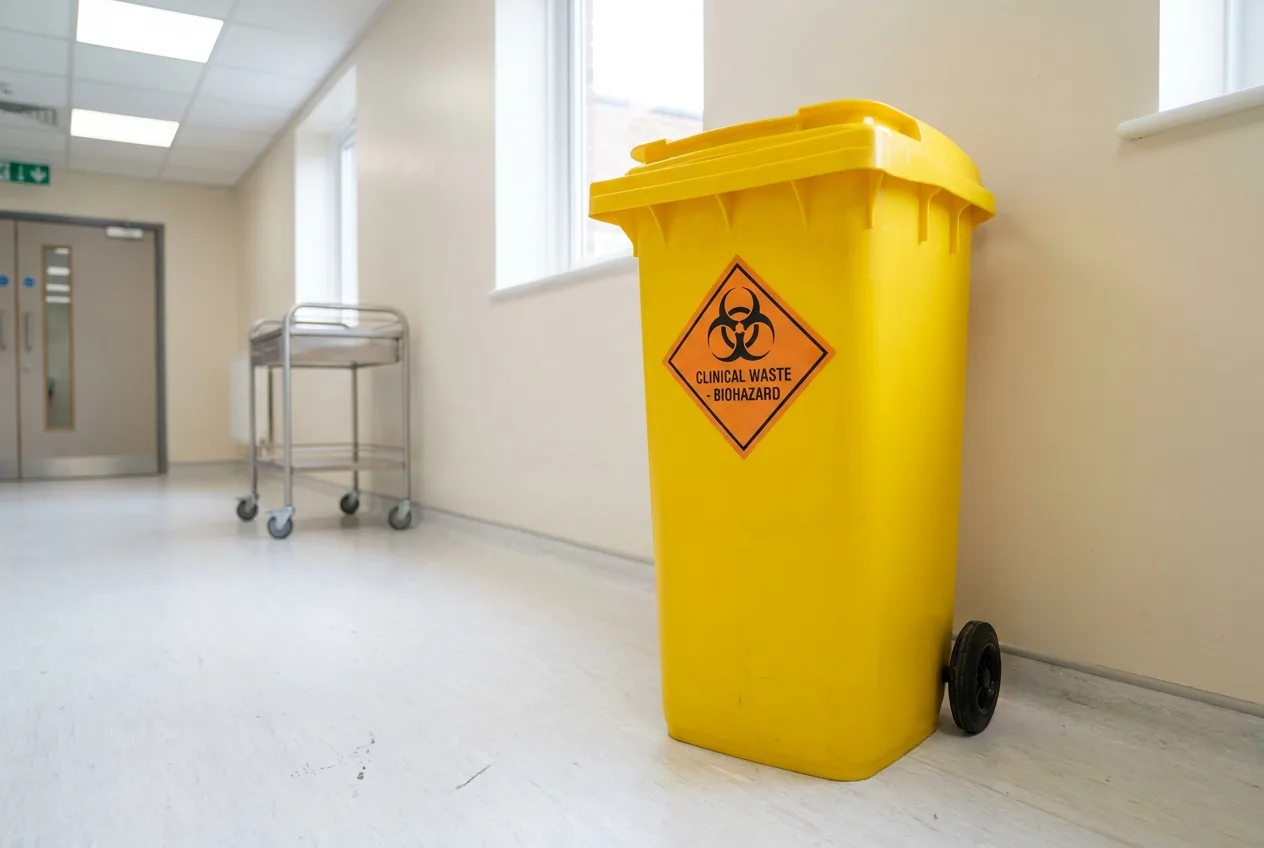
Clinical Waste Collection & Sharps Disposal
Clinical waste and sharps carry real risk. Needlestick injuries, infection transmission, and regulatory prosecution. You need a licensed carrier with colour-coded bins, full documentation, and drivers who understand healthcare environments.
What Happens When Clinical Waste Is Mismanaged?
Needlestick Injuries & Infection
Incorrectly stored or overfilled sharps containers cause needlestick injuries. Each incident requires blood testing, post-exposure prophylaxis, and months of anxiety. The HSE investigates every reported needlestick injury in a workplace.
Criminal Prosecution
Clinical waste is heavily regulated under the Hazardous Waste Regulations 2005, Environmental Protection Act 1990, and Health and Safety at Work Act 1974. Non-compliance can result in unlimited fines and criminal prosecution of the responsible person.
CQC & Inspection Failures
CQC, HSE, and environmental health inspectors check clinical waste management as standard. Missing documentation, incorrect bin colours, or unlicensed carriers trigger enforcement action and can affect your registration.
What Is Clinical Waste Collection?
Clinical waste collection is the compliant removal, transport, and disposal of healthcare waste including sharps, infectious materials, and pharmaceutical waste from medical, dental, veterinary, and care settings. A licensed waste carrier supplies colour-coded containers conforming to HTM 07-01, collects on schedule, and processes waste through approved treatment or disposal facilities with full consignment note documentation.
How Our Clinical Waste Service Works
Hygiene Solutions provides licensed clinical waste collection and sharps disposal across Birmingham, Coventry, Leicester, and the wider UK. Our process ensures complete regulatory compliance:
- Site assessment — We audit your waste streams, identify the correct bin types and colours for each waste category, and recommend collection frequencies based on volume.
- Colour-coded bags and containers supplied — Yellow bags for infectious waste, orange bags for treatment waste, purple bags for cytotoxic waste, yellow-lidded sharps containers conforming to BS 7320, and blue-lidded containers for pharmaceutical waste. Correctly labelled and sized for your setting.
- Scheduled collection — Enhanced DBS-checked driver, carrying photo ID, on a consistent route. Full consignment notes and hazardous waste transfer documentation at every pickup.
- Compliant processing — Waste treated and disposed of through licensed facilities with full traceability. Consignment note returns provided for your records.
NHS Waste Disposal Colour Coding Guide
NHS waste disposal colour coding follows the HTM 07-01 standard used across all UK healthcare settings. Each colour identifies how the waste must be treated and disposed of:
| Colour | Type | Waste | Disposal Route |
|---|---|---|---|
| Yellow | Bag | Infectious clinical waste | Incineration only |
| Orange | Bag | Infectious waste (non-incineration) | Alternative treatment (autoclaving) |
| Purple | Bag | Cytotoxic & cytostatic waste | High-temperature incineration |
| Yellow with black stripe | Bag | Offensive (non-infectious) waste | Deep landfill or energy recovery |
| Yellow-lidded | Sharps container | Needles, blades, sharps (BS 7320) | Incineration |
| Blue-lidded | Container | Medicines/pharmaceutical waste | Incineration |
Using the wrong colour bag or container is a compliance failure that can trigger CQC enforcement action. Our site assessment ensures every clinical waste stream is correctly categorised, colour-coded, and contained.
What Size Offensive Waste Bins Do We Provide?
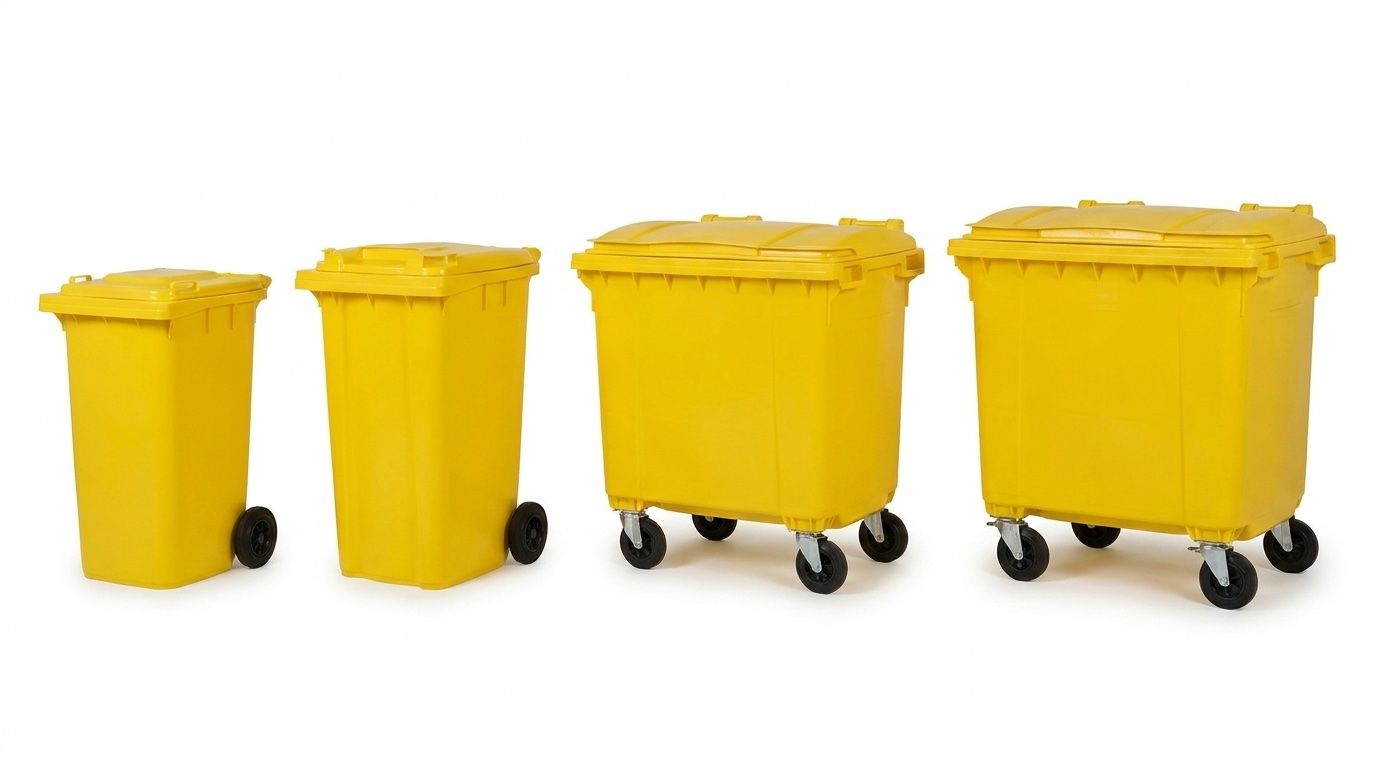
We supply yellow offensive waste bins to your site in four sizes — 240 litre, 360 litre, 770 litre, and 1,100 litre — so storage capacity always matches your waste volumes and collection frequency. The 240L and 360L are two-wheeled wheelie bins suited to smaller sites; the 770L and 1,100L are four-wheeled containers for care homes, schools, hospitals, and other high-volume premises.
| Bin Size | Type | Best For |
|---|---|---|
| 240 litre | Two-wheeled wheelie bin | Small sites, GP surgeries, nurseries |
| 360 litre | Two-wheeled wheelie bin | Medium sites, dental practices, offices |
| 770 litre | Four-wheeled container | Care homes, schools, leisure centres |
| 1,100 litre | Four-wheeled container | Hospitals, large sites, high-volume premises |
Every bin is emptied on a scheduled collection by a licensed waste carrier, with waste transfer notes provided at each visit. Our free site survey identifies the right bin sizes and collection frequency for your premises.
Who Needs Clinical Waste Collection?
Any premises producing clinical or hazardous healthcare waste requires a licensed collection service. This includes GP surgeries, dental practices, veterinary clinics, care homes, nursing homes, schools with medical rooms, tattoo studios, piercing studios, beauty salons offering invasive treatments, and any workplace with first aid sharps.
Care homes face particular scrutiny from the CQC, which inspects clinical waste management as part of its safety domain. Our documentation package is designed to satisfy CQC, HSE, and environmental health requirements.
Medical Waste Collection for Hospitals & GP Surgeries
Medical waste collection covers the full range of healthcare waste streams produced by hospitals, GP surgeries, clinics, and community healthcare providers. This includes infectious clinical waste, sharps, pharmaceutical waste, and anatomical waste. Each stream requires specific colour-coded containers, segregation at source, and licensed collection with full consignment note documentation.
Hygiene Solutions provides hospital waste disposal and GP surgery waste collection with particular attention to the documentation that CQC and HSE inspectors require. Our consignment note package is designed to satisfy regulatory audit at the point of inspection, with every collection fully traceable from your premises through to final treatment.
Why Choose Hygiene Solutions for Clinical Waste?
National providers often bundle clinical waste management into large, impersonal contracts with inconsistent service and complicated invoicing. With Hygiene Solutions, you get a dedicated local team, consistent drivers who understand your setting, and a single, clear invoice.
Clinical Waste Management You Can Trust
Complete Regulatory Compliance
Full consignment notes, hazardous waste transfer documentation, and return confirmations. Your records are always inspection-ready for CQC, HSE, and environmental health.
Correct Colour-Coded Bags & Containers
Every waste stream gets the right bag or container under HTM 07-01. No guesswork, no compliance gaps. We audit your streams and supply exactly what you need.
DBS-Checked, Consistent Drivers
Enhanced DBS-checked drivers, carrying photo ID, on consistent routes. They know your setting, your waste streams, and your staff. Essential for healthcare and care home environments.
Proof of Every Collection
Automatic email confirmation after every clinical waste pickup. Combined with consignment notes, you have a complete, auditable chain of custody.
Simple, Clear Invoicing
One invoice, clearly itemised. No hidden charges, no complicated billing structures. Unlike national providers where deciphering your invoice requires a forensic accountant.
A Real Person, Every Time
No call centres, no ticket systems. When you call, someone who knows your account picks up — and a named contact looks after your service from day one.
The clinical waste compliance documentation alone is worth the switch. Every collection comes with proper consignment notes, and the proof-of-service emails mean I can pull up records instantly for CQC inspections. The service itself has been faultless.
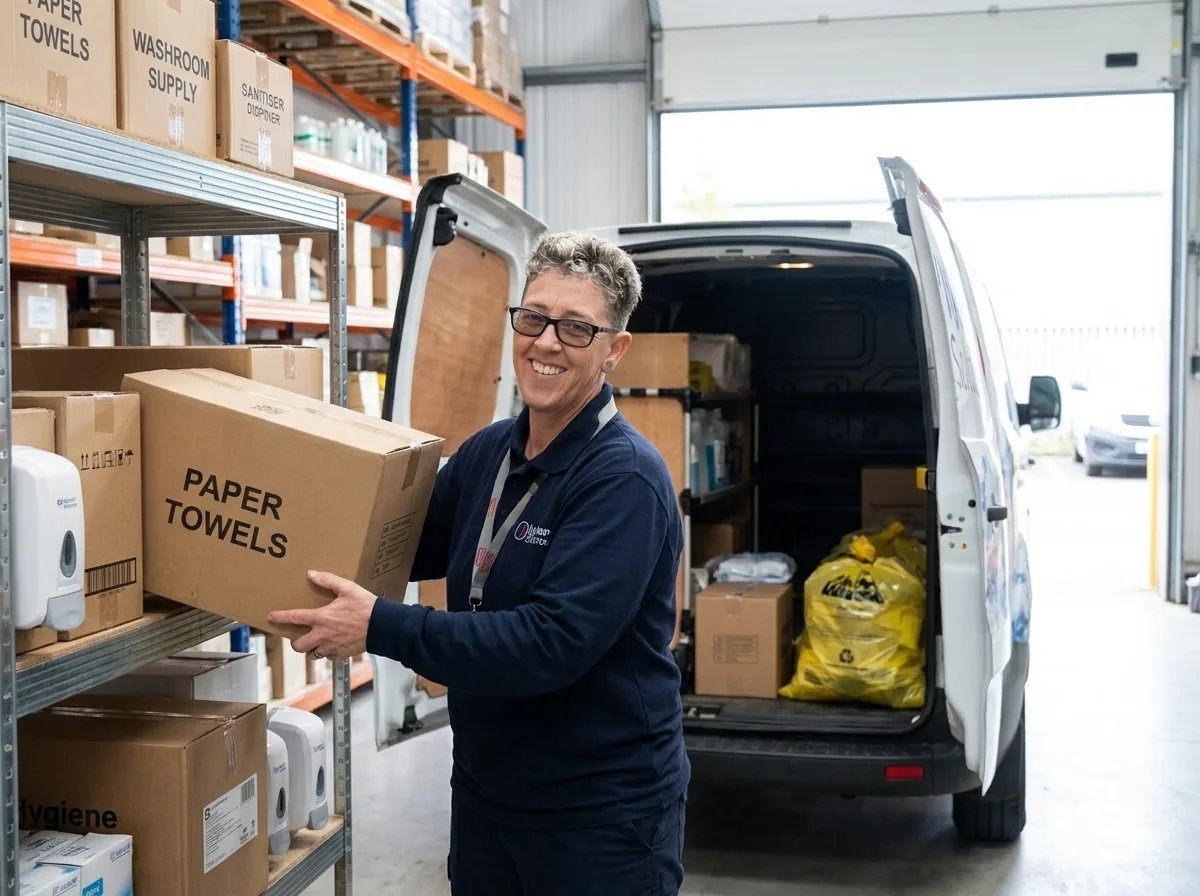
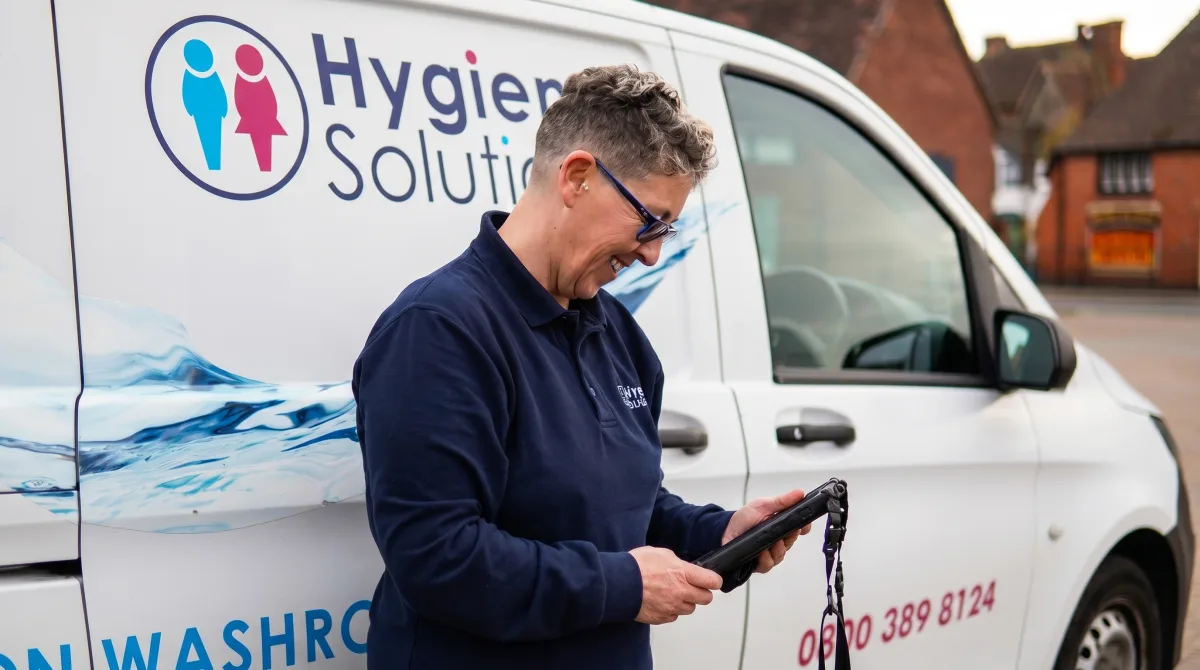
See Our Work in Action
Clinical Waste & Sharps: Your Questions Answered
Expert answers about clinical waste classification, sharps disposal regulations, and healthcare waste compliance.
Commercial Washroom Services Across the UK
Based in Hinckley, Leicestershire. Dedicated routes serving businesses across the UK with our primary coverage in the Midlands and Central England.
Not sure if we cover your area? Book a free site survey or call 0800 389 8124 and we will confirm on the spot.
If You Have a Washroom, We Can Help.
One washroom or one hundred. Book a free site survey and we will assess your setup, advise on the right products, and put together a competitive quote. No obligation, no hard sell.
Hygiene Solutions
We typically reply within a few minutes